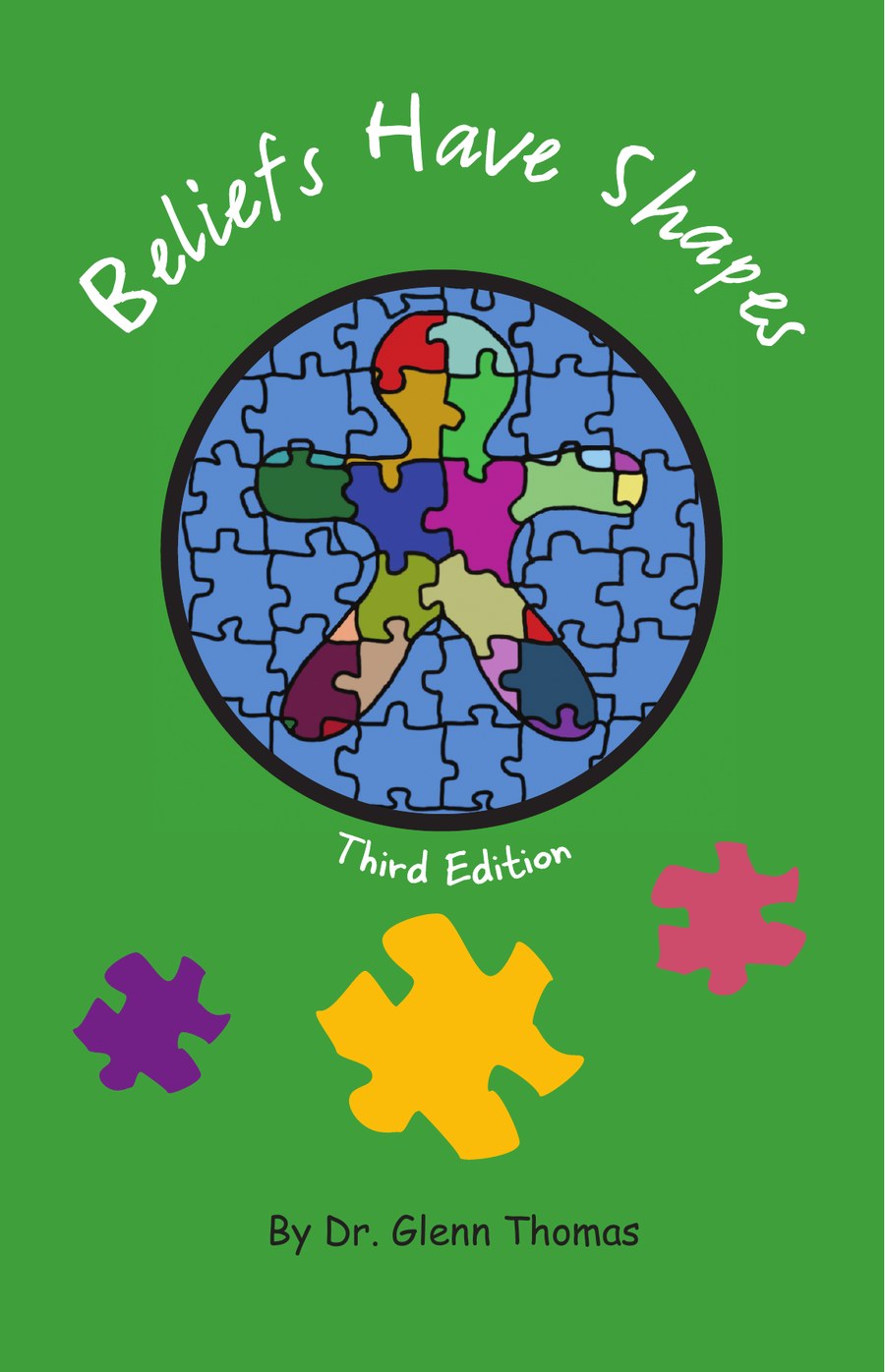
For you and your child to read together
Beliefs Have Shapes
A short story about Steven, Pop, and the girl next door. Includes an afterword for adults, questions for each part, and a quiz for young readers.
Buy on AmazonUsing the books · For parents
Your child will not always be next to you. As they grow, they move toward friends. Toward phones. Toward groups.
One day someone will hand them a belief. You can’t stand beside them. But one habit can go with them.
Where did this come from?
Who gains if I believe it?
That is what Beliefs Have Shapes teaches. Every belief was given to us by someone. We are allowed to look at it.
A child who has learned to look at a belief can stop and think before it takes hold.
Each one works the same way. It builds an attachment first. Then it asks your child to trust and believe.
A stranger online
Someone who seems like a friend. They message all the time. They say kind things. It feels close, fast. Then they ask for a photo. Then come the threats.
The closeness was built on purpose, so your child would trust and believe.
A group that hates
It offers belonging. It feels good to be inside. Then it gives your child an enemy. Distance. Distrust. Fear of people they have never met.
That is how a beliefshape is built. Just like Pop’s, only darker.
A friend with a dare
Say no and you might lose the group. Belonging is the pressure.
A teen who can ask where an idea came from can say no to the idea.
It is not
It does not ask children to reject their families, or to make fun of them. Steven never stops loving his father. Some readers keep a belief after looking at it. Others change it.
It is
Steven was taught to fear the family next door. He had never met them. What changed him was a friend he trusted, and seeing for himself.
It asks everyone
Question what you are attached to. Question what you are against. That goes for parents and children alike.
In The Seven Secrets of Attachment I describe seven things that happen when we attach. When we detach, the opposite happens. Steven shows both. He is attached to Pop. He is detached from the family next door.
A friend he trusted. Scott sends an infoshape that doesn’t fit: Suzanne is really nice.
Seeing for himself. Steven finds Suzanne feeding a mother cat and two kittens.
Doubt, the great slicer. The Blind Detachment breaks. Steven still loves Pop.
Quotations are from Beliefs Have Shapes, Third Edition. The two columns are the seven secrets and their opposites from The Seven Secrets of Attachment.
If your teen questions a belief you hold dear, you may feel angry. That is not a flaw. It is attachment at work.
Notice the flip before it happens. Your child is not leaving you. They are growing up.
When a child stops seeing the world exactly as you do, something is lost. It is all right to grieve it. The relationship does not have to be lost too.
“You will never be in trouble for telling me.”
Shame keeps children silent. If something has already happened:
For you and your child to read together
A short story about Steven, Pop, and the girl next door. Includes an afterword for adults, questions for each part, and a quiz for young readers.
Buy on Amazon
For you
Why we hold on to beliefs, people, and groups, even when they hurt us. It may help you understand your own fear when your child questions something you hold dear.
It includes hard examples, such as cults and abuse. Read it first before sharing it with a teen.
Buy on Amazon